Named after Alderman Henry Broe, an alderman of Rockdale Council 1904-14 and 1917-20 and Mayor of Rockdale 1909-14 and 1918-20.(
The Origins of Street Names in the Municipality of Rockdale, compiled by Alderman Ron Rathbone, 1990)
 Below:
 It's Sunday morning and the cars parked all along here are not only residents', but worshippers at St mark's Coptic Cathedral in Wollongong Rd.
 Below:
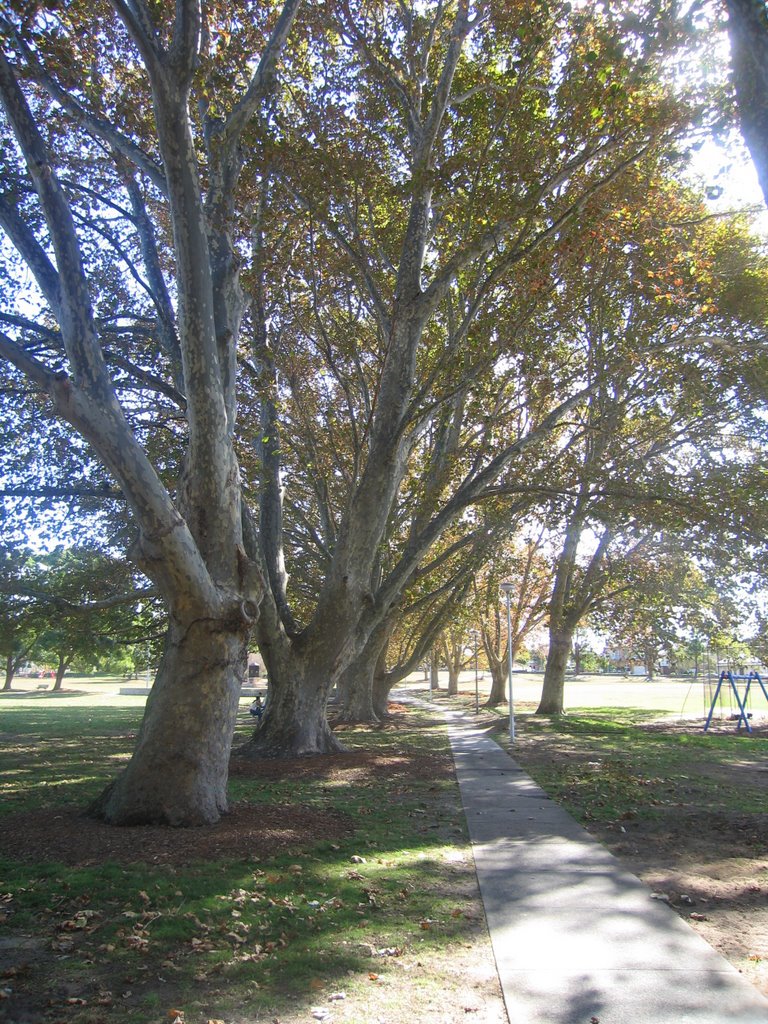
 The most gorgeous feature of Broe Avenue is the sandstone entrance to Arncliffe Park on the corner of Hirst St, and the sandstone fence which runs the length of the park.

 Below:
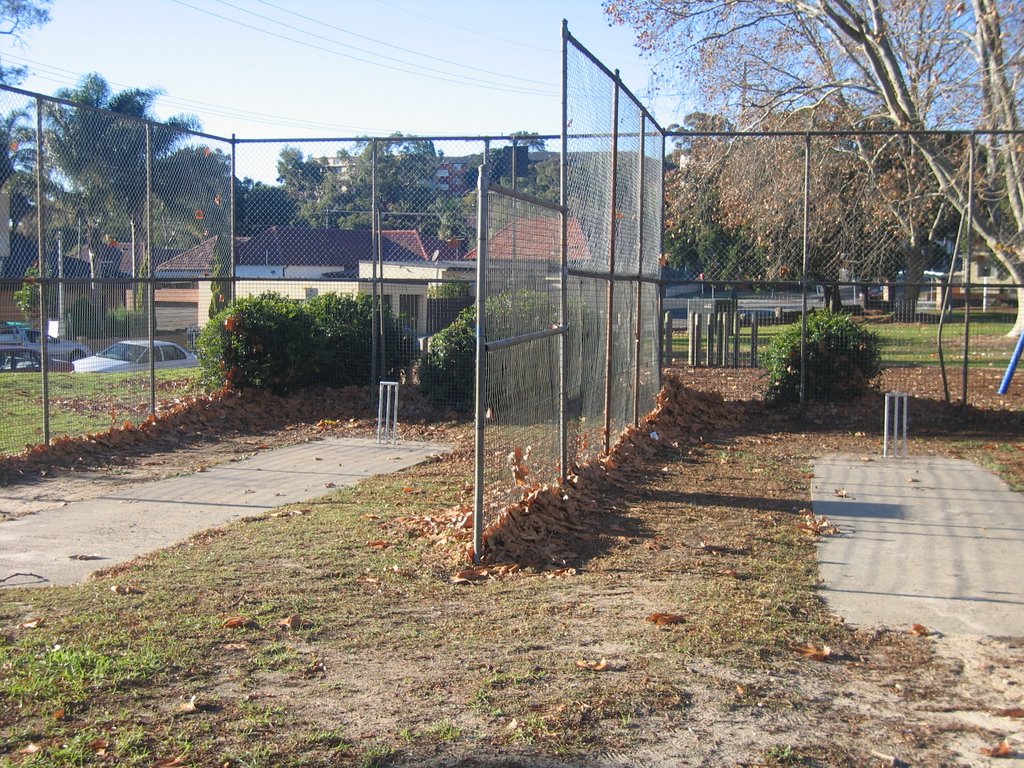
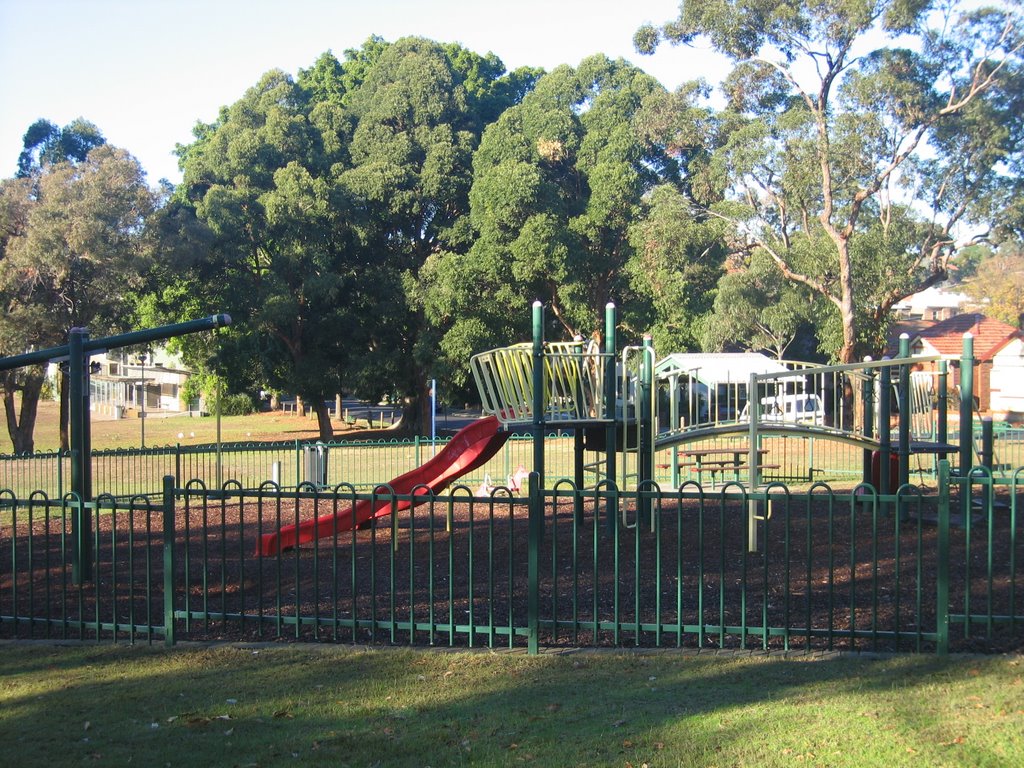
 Cricket nets, and one of the two kids' playgrounds in the park
 Below:
 Newly developed town houses (2008) where once several smaller, single-fronted weatherboard houses stood.
 Below:
 I posted this previously, and one of my readers explained it is the remains of a Water Board sewer vent from just after World War One. Apparently they were made with melted down German artillery pieces brought back after the war. Now THAT'S really interesting!
 Below:
 Looking back towards Hirst St from Wokllongong Rd
 Below:
 Looking towards Station St from Wollongong Rd
 Below:
 From Station St to Wollongong Rd, with the fence of St MArk's on the left.

Photos taken 10 Aug 2008
 Below: Land for sale right next to the air intake vent for the M5 motorway tunnel. This tunnel has been the subject of much controversy, since before it opened. It has not had an air filtration system within the tunnel. Air was taken in here, and expelled, unfiltered, through a stack in Henderson St (Turrella) - we'll see it when I get to "H" for Henderson! Anyway, after many protests, much pressure on the government, demonstrable sickness of residents, and the fact that subsequent tunnels were built with filtration systems, a filtration system is being installed in this tunnel.
 Below: The white buildings in the distance are associated with Sydney Airport.
 Below: Duff St is a dead end at the western end, with a walk way down the hill not visible to the left.
 Below: Sydney CBD. You can see the Harbour Bridge and Sydney Tower quite clearly.
 Below: Looking down the hill towards Hirst St and the corner of Arncliffe Park
 Below: The Hirst St intersection - lookign across to Mitchell St, which runs alongside Arncliffe Park.
 Below: Looking up Duff St from Hirst St